
For the past twelve years, the Loulou Foundation has hosted an annual meeting, the CDKL5 Forum, where scientists and drug developers working on CDKL5 Deficiency Disorder (CDD), together with clinicians and representatives from patient organizations, meet to discuss the latest developments in the field and to advance towards treatments and cures. You can find my summaries from some of the last meetings here: 2018, 2019, 2020, 2021, 2022, 2023, 2024, and 2025.
The 2026 CDKL5 Forum edition took place October 26-27 in London, and will return to Boston next year for the 2027 edition. This was again one of the largest Forum to-date, and I feel very grateful to be part of the Loulou Foundation team and be able to witness and play a role in moving the CDD field forward.
What you will read below is my personal summary from the meeting covering the main take-home messages from this year’s Forum. This is not an official conference summary, and it won’t cover all the presentations, so I apologize in advance to all the scientists and doctors whose work I won’t cover. My focus will be on the main themes that we saw and the main progresses towards treatments.
1. The Forum within the Forum
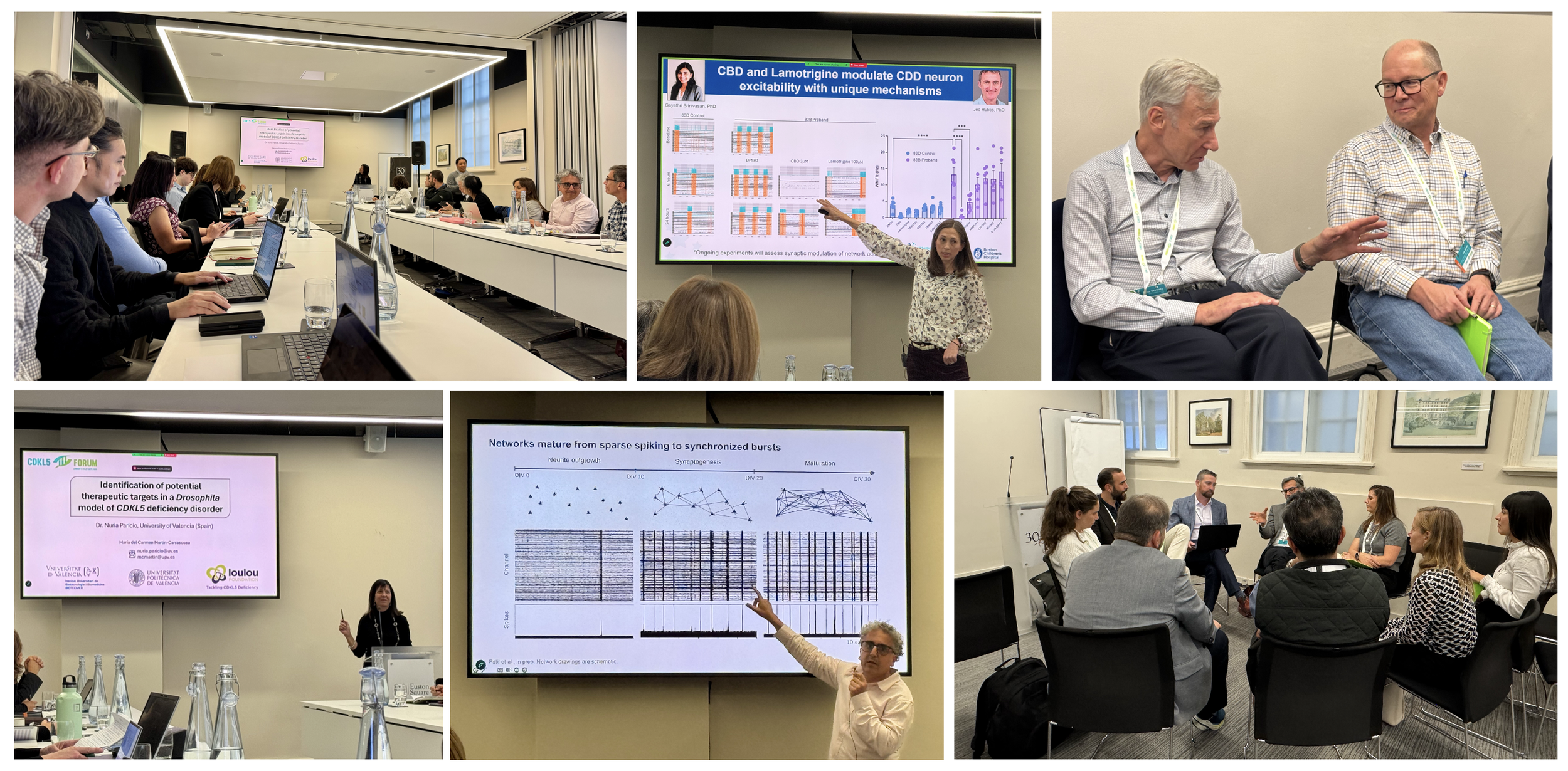
Image: pre-Forum in action; Dr Liz Buttermore (Boston Children’s Hospital); Dr Orrin Devinsky (NYU Langone) and Prof Tim Benke (University of Colorado School of Medicine) discuss during the breakout session; Dr Nuria Paricio (Universidad de Valencia); Dr Roy Ben-Shalom (University of California, Davis); one of the breakout groups of the breakout session on clinical outcome measures.
If there is a theme that emerged very strongly in this Forum it is “the Forum within the Forum”.
The day before the Forum officially stats, the Loulou Foundation hosts an internal meeting with our current grantees and main collaborators that we call the pre-Forum. But the pre-Forum has grown to become a Forum on its own right! we had 11 presentations that produced many important learnings. I want to give visibility to those scientists since they didn’t present in the open Forum:
Research tools: we still need better research tools to work on CDKL5 biology. Ario de Marco is making better CDKL5 antibodies. Liz Buttermore of BCH has built a great in vitro model of CDD using patient iPSCs and hyperexcitability readouts (epilepsy in a dish) and told us how it is being used in many collaborations and for drug testing. Roy Ben-Shalom also has an invitro model, this time with mouse neurons, where he can see super firing of CDD neurons, and he is developing a “yellow pages” for CDD to know who has done what and to handle CDD research that he calls ChatCDD. This ChatCDD should become available next year.
Targets and treatments: How do we know what to target to treat CDD? Nuria Paricio and Natercia Conceicao showed data from CDKL5 deficient drosophila and CDKL5 deficiency zebrafish respectively, where they are learning about altered signaling pathways that we could target. These animal models are also excellent research tools. Michela Fagiolini is developing an ASO therapy for mice who carry a specific mutation in CDKL5 to see how effective ASOs might be for this disease. And Liz Buttermore showed us that in her in vitro test, cannabidiol seems to be a particularly effective drug.
Biomarkers: We need ways to see what is happening in a brain with CDD. Yijen Wu showed us how to image mitochondrial activity and synapses in the brain of living mice missing CDD. Daniel Toker is building an AI to decode patients EEGs, to be able to recognize CDD in an EEG and also understand what happens in those brains.
Biology and disease understanding: Heather Olson is leading a fascinating clinical study called ExCEED, measuring outcome measures in atypical patients with CDD that either don’t have epilepsy or who have high motor or language skills despite having CDD. They have seen that behavior becomes a big problem in patients who have independent mobility, and believe that some particular mutations or skewed X inactivation (more neurons luckily choosing to read the good CDKL5 copy) could explain these cases.
Diagnosis: the CDKL5 protein has a long tail that we don’t understand how it works, so we don’t know how to interpret the impact of a patient mutation affecting that region. Christopher McGraw and Keren Lasker shared their unpublished research on what this long tail could do, which helps understand not only protein function but also how to interpret mutations in that region.
By the way, my “best title of the Forum 2026” award goes to a pre-Forum presenter: Keren Lasker from the Scripps Institute with “Disorder with Direction: The Cellular Address Code of CDKL5”.
Like the pre-Forum, which has pretty much become a meeting on its own right, the breakout sessions that are typical from the first day of the Forum are growing in size. This year we had a breakout session to discuss the topic of clinical trial design in CDD that was so large that it split into 5 breakout sessions of the breakout session. It had great questions like how to best use natural history as a control group in trials, what matters the most and what can be measured the best. There were representatives of patient organizations sitting on each of the discussions, alongside doctors, scientists and industry representatives.
Other breakout topics were iPSC models (which started as a working group some Forums ago), preclinical mouse models, and clinical blood markers for CDD. And to prepare these breakout sessions, we hold pre-Forum workshops online the week before the Forum, so in the end the 2-day Forum ends up being much more than just a 2-day meeting, and essentially several Forums within the Forum. We are lucky to have Dan Lavery and Jasmine Carter from the Loulou Foundation putting all this together.
Bottomline: the Forum has grown so much that now it has pre-Forum workshops, breakouts within breakout sessions, a pre-Forum that could be a conference on its own, and multiple collaboration networks that meet at the Forum. I predict that we might soon need to adapt the Forum format to accommodate for so much work, progress and interest.
2. Reaching an inflection point in CDD treatment
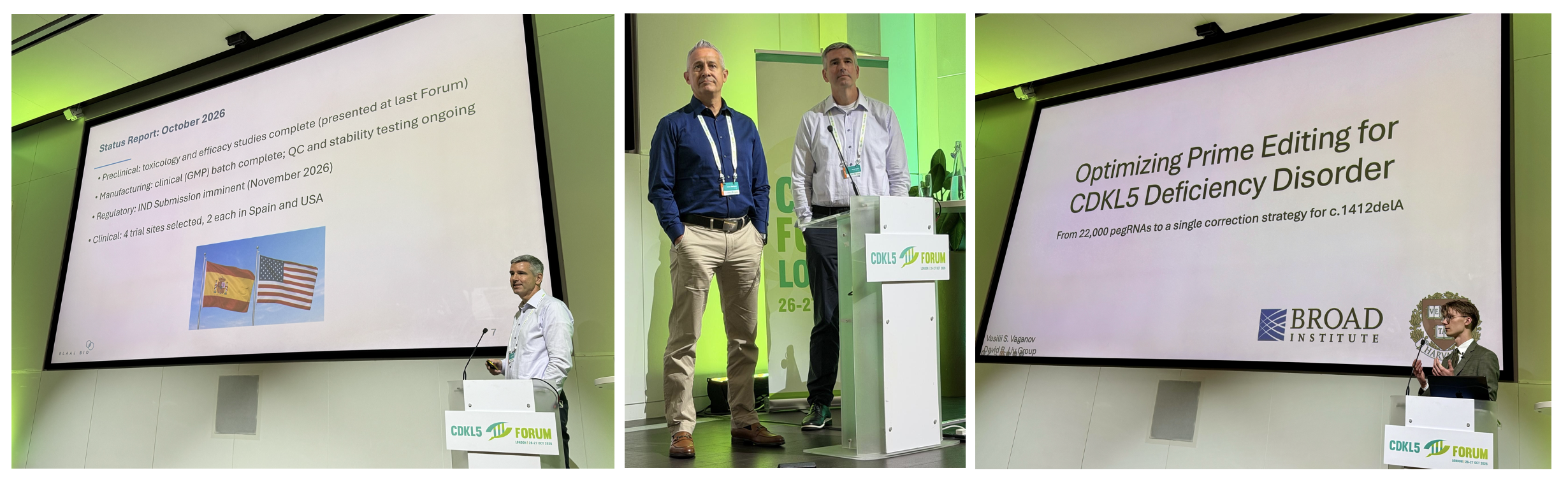
Image: Dr Russ Addis (Loulou Foundation and Elaaj Bio); Dr Russ Addis and Steve Maricich (Loulou Foundation and Elaaj Bio) during the round of questions; and Vasilii Vaganov from Dr David Liu’s lab at the Broad Institute.
The big announcement that came at this Forum is the arrival of the first gene therapy trial for CDD next year. This first gene therapy is called ELJ-101, and it is being developed by the Loulou Foundation under its fully-owned subsidiary Elaaj Bio. The gene therapy uses a virus to deliver a healthy copy of the CDKL5 gene to neurons, and was started in collaboration with Professor Jim Wilson at the University of Pennsylvania. More than 6,000 people have been treated with viral gene therapies, and there are 5 gene therapies in trials for other diseases using the same virus of ELJ-101, but this one has been designed to carry CDKL5 inside so it required a lot of CDD-specific work before reaching trials. After completing the efficacy studies in mice and the safety studies in monkeys, the gene therapy has been manufactured at Viralgene and it is now ready for regulatory submission. The Elaaj team is submitting to the FDA a request to start clinical trials (called an IND application) in November of 2026, and will then do the same process in Spain. The plan is to include two hospitals in the US and two in Spain in this very first clinical trial for a total of 12 participants. The trial is likely to start recruiting next spring.
Russ Addis and Steve Maricich from the Loulou Foundation and Elaaj Bio, explained that this first trial will include girls and women with CDD, ages 4 and above, who have epilepsy. The trial is called IMPACT-CDD, and the hope is that as soon as the first trial has enough data to support safety and efficacy, the program will progress to a broader trial that will reach more patients. For more information I will refer you to the website of Elaaj Bio.
At this point, I want to zoom out from the specific trial details and note two things.
Number one: this is not the only gene therapy in development for CDD. There are at least two other gene therapies designed to add a new copy of CDKL5 gene to neurons that could also reach clinical trials. We are rooting for the research teams who are advancing those programs and who were also with us in London.
Number two: this first gene therapy trial represents an inflection point in how we are able to treat CDD. Until now we had clinical trials with small molecule drugs designed to treat epilepsy in CDD and other syndromes, but for the first time, we will have trials with therapies designed to treat the cause of the disease. The gene therapies to add a new copy of the gene to neurons are just the first ones to try to treat the cause of the disease, and to promise improvements across many disease domains. These are followed by other modalities of gene therapy that if everything goes well will progressively reach clinical trials. This includes the gene therapy with a modified CRISPR to reactivate the second CDKL5 gene copy on each neuron (presented by Julian Halmai), and other modified CRISPR versions to correct one DNA letter (presented by Jaque Ip) or to add one missing letter (presented by Vasilii Vaganov).
And this is why the announcement of this year is so important. Because we are about to start a new period in medicine where clinical trials seek to treat the CDKL5 gene, not only the symptoms. We came out of this Forum envisioning how, by the time that we meet again for the 2027 Forum, there will likely be some families for whom the gene therapy will have become a reality. And hopefully this will be the first of several gene therapy trials, because IMPACT-CDD is not just one trial, this is an inflection point with many more shots on goal approaching the clinic.
Bottomline: This might have been our last CDKL5 Forum without gene therapies. If the regulatory approvals go well, by the time we meet for the 2027 Forum there will be some girls or women with CDD who will have received a gene therapy. 2027 promises to be a breakthrough year for the CDD medical field.
3. We’ve come so far, and a call to do more
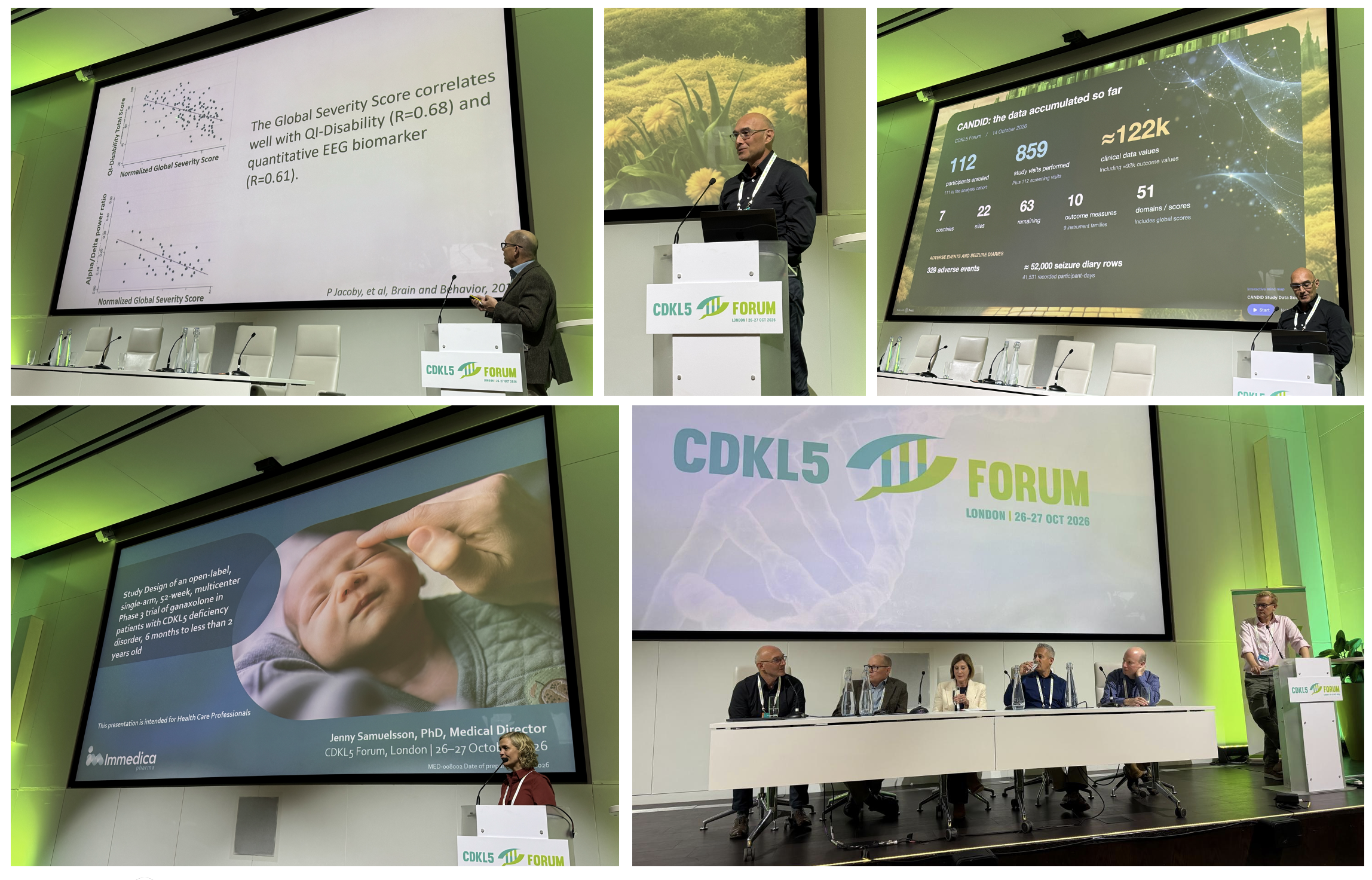
Images: Dr Tim Benke (University of Colorado School of Medicine) presents on the ICCRN clinical results; Dr Xavier Liogier (Loulou Foundation) presents on the CANDID data collection; Dr Jenny Samuelsson (Immedica) presents on ganaxolone study plans; discussion panel including presenters and industry experts Dr Gail Farfel and Dr Omar Khwaja.
In addition to expecting the arrival of the first gene therapy, we reviewed the pipeline of clinical trials and approved drugs for CDD. Ganaxolone is approved for treating seizures in CDD in the US, EU, UK, China Kuwait and UAE, although the company is still expanding its commercialization. They are planning a trial in children with CDD under the age of 2 in the US and Europe that will start hopefully next year. Fenfluramine was also successful in a Phase 3 trial for seizures in CDD and we are awaiting news for a potential label expansion to also include CDD as an authorized indication. Currently the attention of companies developing drugs for epilepsy has moved to the “all DEE” indication, which is putting together all of the epilepsy syndromes (or Developmental and Epileptic Encephalopathies) under a single clinical trial, and we know from the observational study CANDID that more than 80% of CDD patients have enough seizures to participate in these trials. This includes the trials of relutrigine and bexicaserin (both fully recruited but still ongoing) and more trials to come. So we can expect more trials in DEEs to become available and accept many participants with CDD. As I wrote in my Forum summary last year, CDD families currently have more access to new experimental therapies than ever before.
In addition to these medicines to treat seizures and the gene therapies, I made a call for precision medicines for CDD in my presentation at the Forum. Precision medicine drugs are normal drugs, but that target key aspects of CDKL5 deficiency and are expected to help improve multiple disease aspects and not just seizures. I offered several reasons for this call to action:
There is a need and an opportunity for such treatments for CDD, since we currently have a pipeline gap between the seizure drugs and the upcoming gene therapies.
The development path is ready, because today we know how to design trials for CDD that measure more than just seizures thanks to years of natural history and endpoint-enabling research by teams like the ICCRN and the CANDID team.
Our numbers of estimated patients with CDD and known patients with CDD are comparable to many commercially attractive indications. This means a precision medicine for CDD will have attractive commercial value.
Because of so much research into the biology of CDD, there is already a good list of attractive and druggable targets worth pursuing.
Some of the attractive targets have drugs in clinical trials for other diseases, so I hope to see some of these expand their trials to include CDD and be able to treat more than just seizures. I believe in the next few years, most trials for CDD will be with gene therapies and precision medicines.
We saw several presentations and an industry panel to discuss why CDD is ready for more complex clinical trials. Xavier Liogier from the Loulou Foundation explained that we are 3 months away from the completion of the CANDID study, which has followed the clinical evolution of CDD patients in the US, EU and MENA for three years. He said CANDID has involved 112 families, 859 visits so far, and 122,000 clinical data points. Very impressive. Tim Benke from Colorado explained that the ICCRN study is also reaching its final stages, and praised the huge work from the families who have participated. This study also had more than 100 participants. This is the study that has created and validated a global severity scale for CDD that we call the CCSA. Eric Marsh from CHOP believes that some EEG signs could be used as markers for disease severity in CDD, and the final panel highlighted how these longs studies have brought us to a point where we can now design clinical trials for gene therapies.
Bottomline: The enormous work from scientists, families and doctors over the past many years give us the opportunity to design precision medicines for CDD that treat the disease. In the next few years, most trials for CDD could be with gene therapies and precision medicines.
4. Thank you to / from the scientists
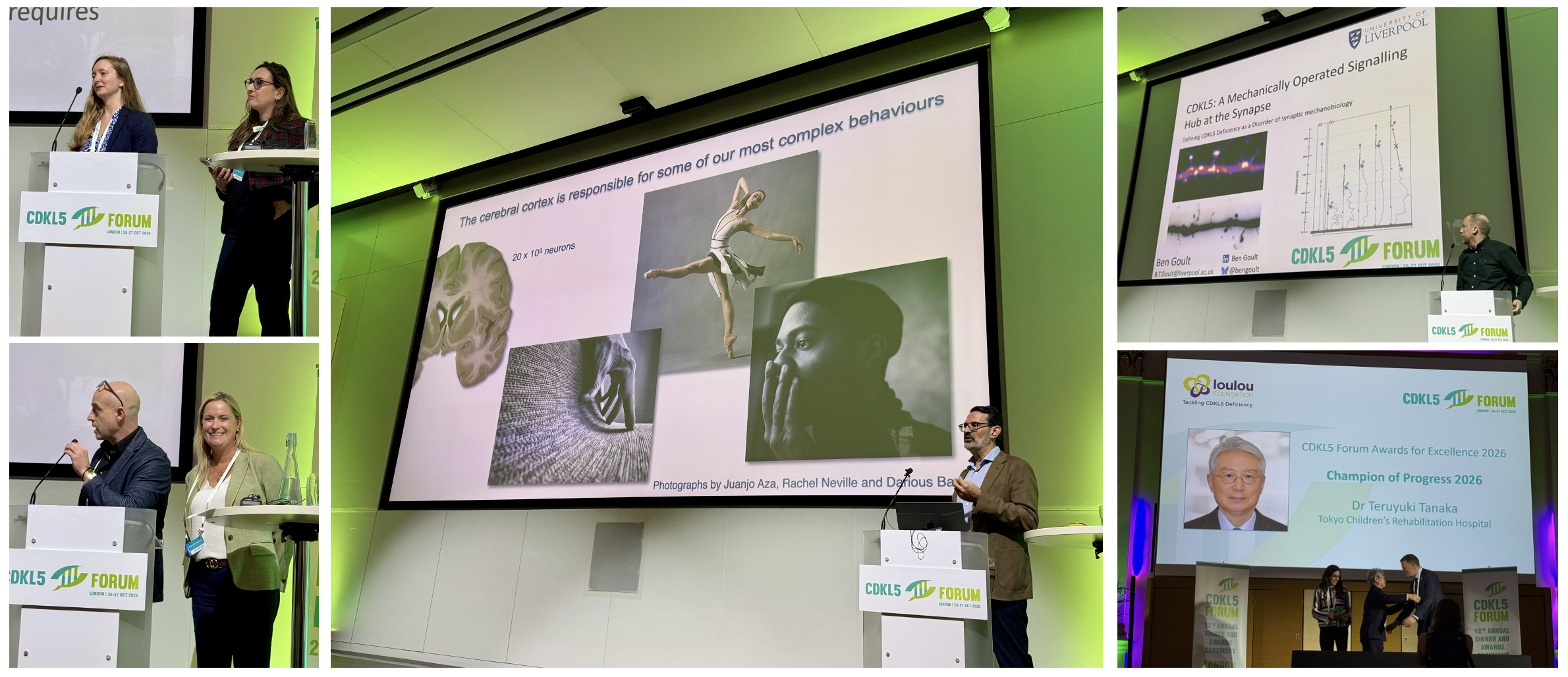
Image featuring a few of the scientists: Top left Dr Rose Glass (Boston Children’s Hospital) and Dr Hourinaz Behesti (Hebbian Bio); Bottom left Dr Massimiliano Bianchi (Ulysses Neuroscience) and Dr Sharyl Fyffe-Maricich (Ultragenyx), Center lecture speaker Prof Oscar Marin (King’s College London); top right Dr Ben Goult (University of Liverpool); bottom right Dr Teruyuki Tanaka receives the Champion of Progress 2026 award.
As I think about the main themes that emerged at this Forum, I want to dedicate one section to the scientists. This is the first year where I noticed several scientists saying from the stage how fortunate they felt to be part of a community that is making such a big difference. I wrote down Vasilii Vaganov’s words that said “thank you for putting together this community, I feel really lucky to be standing now here”, because they expressed very beautifully what many of us felt. Others expressed similar sentiments from the stage, like my colleague Xavier Liogier, or during the breaks. I think that in this Forum, with the arrival of the gene therapies, we (scientists) were particularly aware that we are making history.
And this is important because science can take very long to produce something that can reach patients and change lives. The in-between looks like many years of proteins and mice and graphs that live in power point slides and science publications. Professor Oscar Marín from King’s College London, who delivered the Sir Colin Blakemore Memorial Lecture, was a great example of this by reviewing for us his work over decades to decode how interneurons rule the brain in health and disease and the basis for brain plasticity. Because science takes very long, and some of the advances that we are seeing today were probably born in a lab at the turn of the century.
Some other highlights of the science presented at this Forum include the possible role of CDKL5 in immune response (by Josephine Thinwa), looking for potential biomarkers of CDD in cheek swabs (by Maurizio Giustetto), more work on the long tail of CDKL5 (by Ben Goult), the role of CDKL5 in controlling neuronal skeleton (by Sila Ultanir), and how seizures spread or not in the brain of rats missing CDKL5 (by Darren Walsh). There was much more presented at the Forum, and also a room full of science in the form of poster presentations that included work towards producing CDKL5 pure protein in the lab or the perspectives of CDD parents towards gene therapy trial participation. The Forum was full of science that will only reveal its true impact many years down the road.
Before I finish this section, my “best slides of the Forum 2026” award goes to keynote lecture presenter: Oscar Marín from King’s College London, for his slides showing how the brain cortex controls all we do, and how we could imagine the cortex as an orchestra where some neurons are the musicians while others are the conductor.
And I also want to highlight that the CDKL5 Forum Champion of Progress Award of this year went to Professor Teruyuki Tanaka from the University of Tokyo, for his contributions to CDD understanding and his love and support for the patient community. Sometimes you don’t want to wait so many decades to make a true impact.
Bottomline: the field of CDD research is maturing and harvesting the work of many years of work. Because it does take a village (and a decade or two) to really move the needle in medicine. At the 2026 Forum, many scientists expressed how they feel fortunate to be part of a community that is making history.
5. The Voices of the Patient
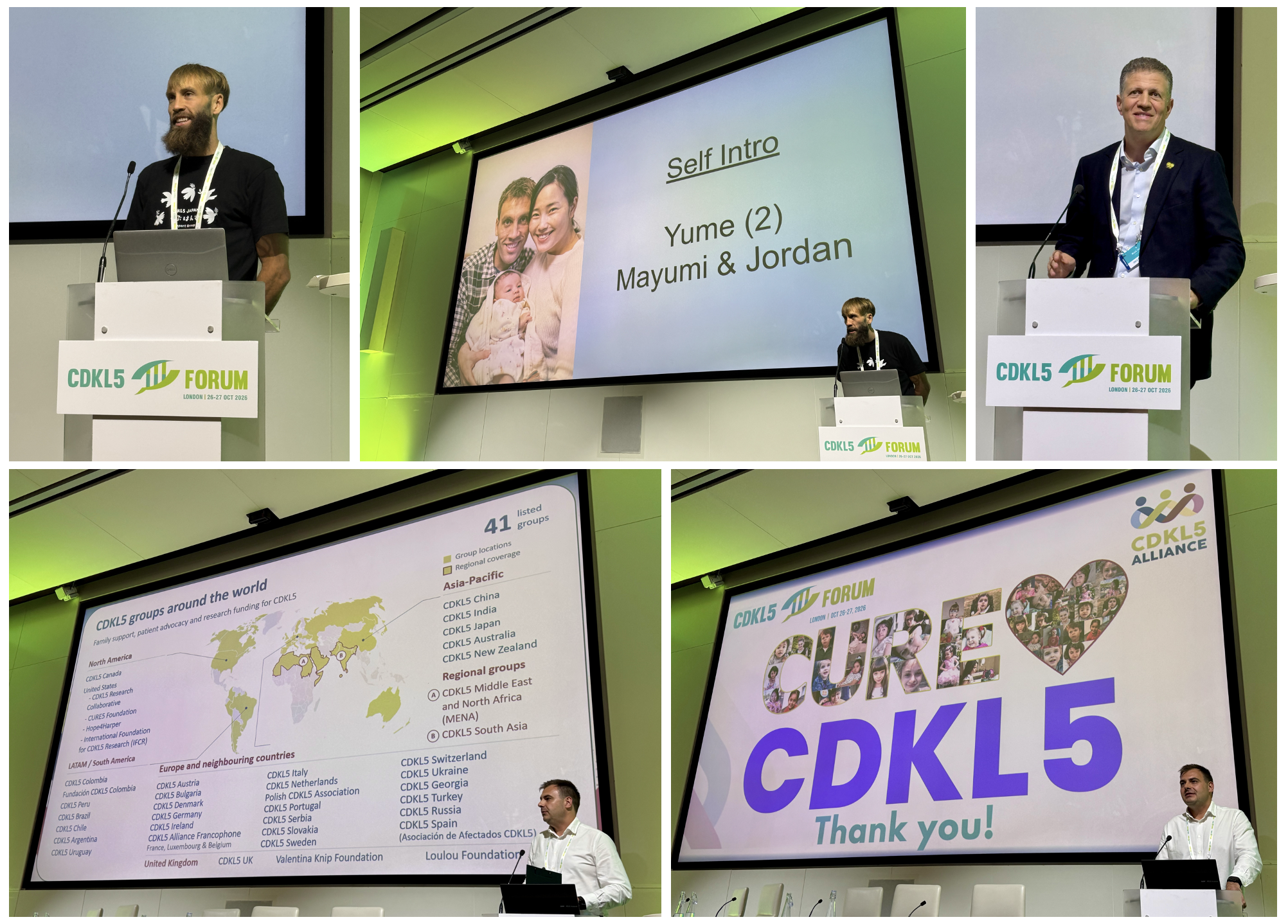
Image: Jordan Langen (CDKL5 Japan “Love-Hands”) presents the Voice of the Patient; Majid Jafar (Loulou Foundation) shares some closing remarks; Michal Habrych (CDKL5 Poland and Chair of the CDKL5 Alliance) recaps the work of the global community of CDD families.
We always open and close the Forum with the “Voice of the Patient” presentations. The first one, by Jordan Langen from CDKL5 Japan “Love-Hands”, had the entire theater crying with him before a standing ovation. He told us about his daughter named Yume, who is 2 years old, and the 62 families in CDKL5 Japan. He spoke about how much he would like to hear “the actual voice of the patient”, because many kids with CDD like Yume don’t speak yet and theirs is the voice that we want to hear. Jordan explained that for families “the Forum is everything, it is out Super Bowl!” and made a call for collaboration.
While Jordan represented the voice of living with CDD, Michal Habrych, from CDKL5 Poland and Chair of the CDKL5 Alliance, represented the voice of the patient community as a partner for therapy development. In a very professional presentation, Michal (father of Natalia, who is 5) spoke about 41 national and regional patient groups across the work who bring families together, participate in clinical research, financially support research studies and make sure that clinical trials in CDD recruit successfully. Because in rare diseases like CDD, the patient community has a voice and a role that goes well beyond the patient experience.
In 2027, the Alliance turns 10-years old, and the international patient conference will be hosted by the Alliance Francophone for CDKL5 in Paris in May 6-8.
The last voice that closed the 2026 Forum was that of Majid Jafar, father of Loulou, age 12, and co-Founder of the Loulou Foundation which runs the annual Forum. Majid asked the audience to take some idea from the Forum and turn it into a personal action, because what matters now is what we do when we leave the room. He reminded us that “for thousands of children and families living with CDD, time matters”, and to make the 12 months between now and the next year Forum count. Because the success of the Forum is not the presentations that we see, but the treatments that we bring closer to the patients.
The next Forum will take place in Boston, in November 1-2 of 2027.
And that’s it for the 2026 CDKL5 Forum, where we started having Forums within the Forum, learnt about the arrival of the first gene therapy trial for CDD, and saw tangible progress towards translating more science into more treatments. This was another great Forum.
I hope you enjoyed this summary, and I’ll see you in Boston.
Ana Mingorance, PhD
In memory of Ibo, Jimena, Astrid, Caio, Brynn, and so many others who left us too soon.
Disclaimer: This is my own summary and key learnings, and not an official text about the Forum by the Loulou Foundation. I write these texts with the parents of people with CDD in mind, so excuse also my lack of technical accuracy in parts.